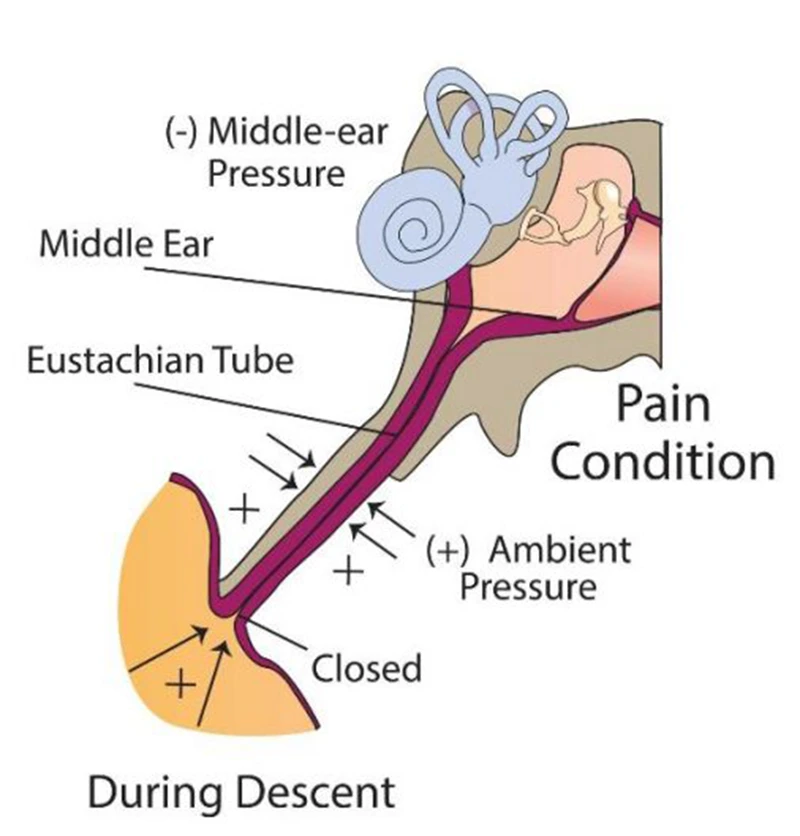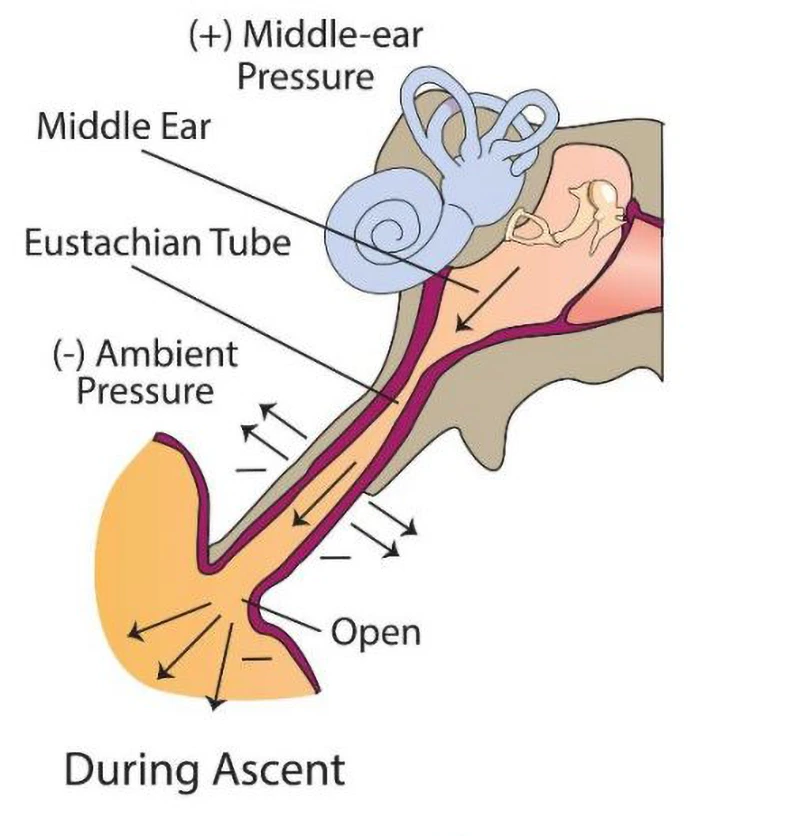

As always, I’m excited to share this installment of Safety Stop in my President’s Message. It is my goal to raise awareness about the risks associated with diving, and also underwater photography. I welcome your individual stories and submissions to the Safety Stop column so please don’t hesitate to email me at President@sfups.org. If you wish to share your article anonymously just let me know. In this month’s Safety Stop article, I would like to briefly discuss one of the most common problems people experience while scuba diving: equalizing their ears. Even the most skilled scuba divers have problems equalizing their ears from time to time. Experiencing pain while scuba diving takes all the fun out of the it, especially if you have to call the dive.
According to the Divers Alert Network (DAN), there are at least 6 common methods to equalize your ears. (click here) Additionally, most divers have their own “custom” method(s). I will share my favorite later on in the column. Regardless of the method used, experts recommend equalizing early and often, especially in the first 10 feet. Be sure you don’t use excessive force during each of the methods and perform them for 5 seconds or less at a time. Extending your head and “looking up“ stretches your Eustachian tubes and reduces the amount of force to perform a successful Valsalva maneuver by 50%, compared to having your head and neck in the down position. It is generally not recommended to scuba dive if you are congested or if you have a cold.
Let’s briefly describe the some of the most common methods below. Many of these methods work by opening the lower ends of the Eustachian tubes, allowing air to enter. The Valsalva maneuver: pinching your nostrils and attempting to blow through your nose. The Toynbee maneuver: pinching your nose and swallowing. The Frenzel maneuver: pinching your nose and making a sound of the letter “K “. Voluntary tubal opening: tense your throat muscles and move your lower jaw forward and down as if attempting to yawn. The Lowry technique: pinch your nose, blow, and swallow. the Edmond’s technique: pinch your nose, blow, and move your lower jaw forward as if starting to yawn. My favorite: performing the Valsalva maneuver while sidebending your head away from the ear that will not equalize. This stretches the Eustachian tube, and it works for me pretty much every time.
Most authorities recommend equalizing every 2 feet of descent. The generally accepted descent rate is 60 ft./min., which means attempting to equalize every 2 seconds. Many divers descend more rapidly, while many others descend much more slowly. That’s why it’s recommended to dive with a buddy that knows your preference to ensure your safety. One thing is certain, if you made a mistake and injured your inner ear attempting to equalize (known as barotrauma), it’s best to not get back in the water until your ears have healed. Doing so risks getting an infection, or even worse causing permanent hearing loss.